
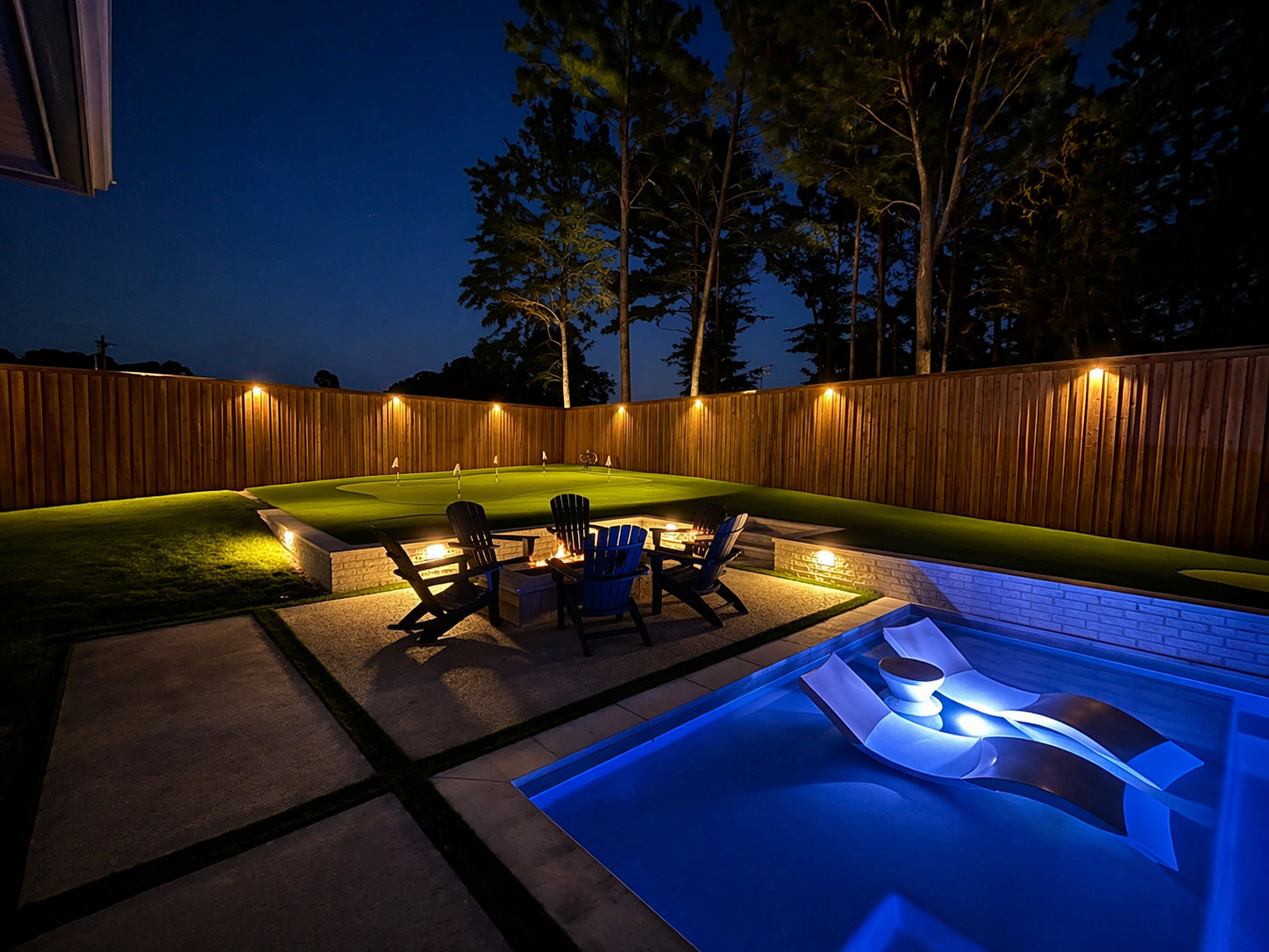
When it comes to outdoor lighting, brighter isn’t always better. While some homeowners assume that a few high-powered fixtures will do the trick, this doesn’t typically create the best results. The brighter the lights are, the greater the risk of glare, dark spots, and uneven lighting.
Professional landscape lighting, on the other hand, typically uses more fixtures with lower lumens. This creates a more balanced look that reduces glare and enhances curb appeal.
If you’re considering adding outdoor lighting to your property, keep reading to learn more about the importance of lumens, why layered lighting creates the best results, and why fixture placement matters more than brightness.
What Are Lumens, and Why Do They Matter?
Lumens are used to measure light output. They’re different from watts, which measure energy consumption. Typically, people see wattage listed on a lightbulb and think that a higher wattage means a brighter light. And while this is often the case, the light output of different types of bulbs varies, even if they have the same wattage — just because a bulb consumes more energy doesn’t mean all of that energy becomes light.
Lumens, not watts, are what matters most when designing outdoor lighting systems. More light isn’t always better. Excessive brightness can wash out architectural details and landscaping features, defeating the purpose of improving visibility at night. Overlighting can also create harsh shadows and visual discomfort, undermining the space’s usability.
Why Fixture Placement Matters
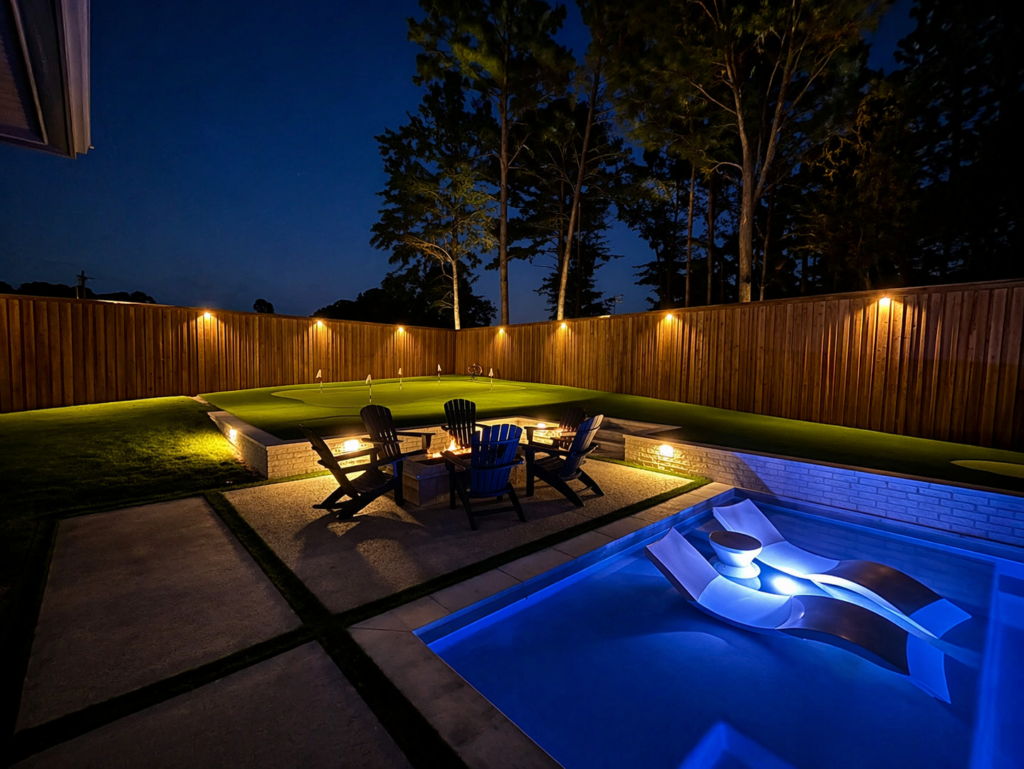
The number of lumens your fixtures emit isn’t the only thing that matters. Fixture placement is also essential for creating a balanced, effective lighting design. Professional designers focus on fixture positioning, beam spread, and layering in order to direct light precisely where it’s needed rather than just flooding the whole space with excessive brightness.
The Professional Approach: Layered Lighting
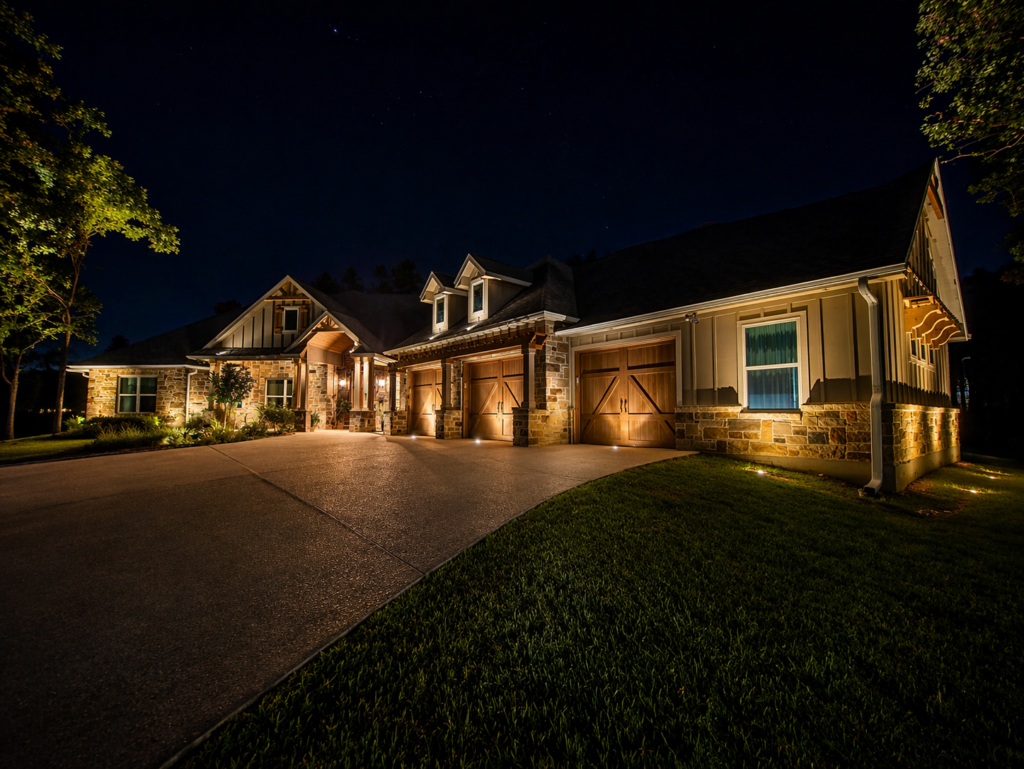
Effective landscape lighting aims to create depth and dimension rather than brightness. By using multiple low-lumen fixtures, you can more evenly distribute light across the landscape and add depth to gardens, pathways, trees, and architectural features. It’s just like indoor lighting design — using multiple light sources rather than one super-bright bulb creates a warmer, more inviting atmosphere and allows you to highlight multiple elements.
Reducing Harsh Glare
Bright, concentrated light creates glare, which actually reduces visibility. Stepping outside at night shouldn’t require sunglasses! Instead, opt for lower-lumen fixtures to create a softer, more natural glow. This improves the viewing experience from both inside and outside the home and allows guests to enjoy outdoor spaces without feeling like they’re standing under a spotlight.
Eliminating Dark Spots
Relying on a handful of overly bright fixtures often leaves large gaps between illuminated areas. This creates areas of extreme brightness and deep shadows. On the other hand, strategically placing several moderately bright fixtures creates more consistent coverage and smoother transitions between light and shadow.
Enhancing Curb Appeal
Luxury properties often use numerous subtle lighting fixtures instead of a few bright ones. This layered approach creates a more sophisticated, professional-looking appearance that instantly boosts the property’s curb appeal. Plus, thoughtfully designed lighting helps show off your landscaping after sunset, maximizing the value of your existing outdoor improvements.
Improving Safety
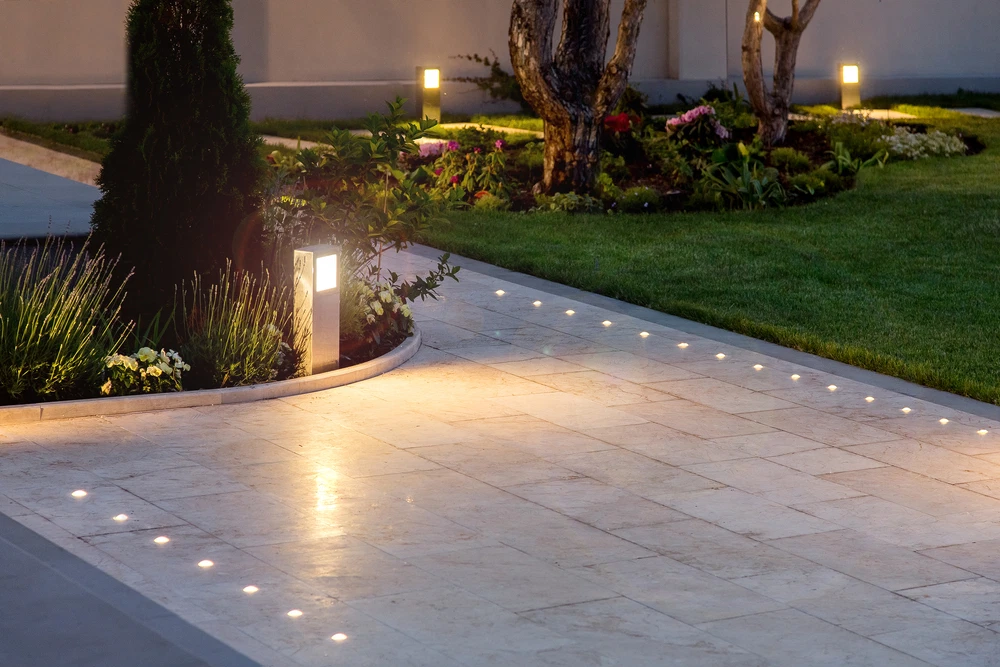
Multiple low-lumen path lights facilitate better, safer navigation than a few bright floodlights. They illuminate potential tripping hazards without creating glare or shadows, ensuring guests can see where they’re going.
Creating Natural-Looking Nighttime Scenes
The point of landscape lighting isn’t to replicate daylight; it’s to create natural-looking nighttime scenes. Techniques like downlighting and moonlighting using low-lumen fixtures help recreate the look of natural illumination and preserve the beauty of the night.
How Many Lumens Do I Need for Outdoor Lighting?
So, with all that being said, how many lumens do you need for your outdoor lighting? The answer depends on what your goal is and where you’re planning to install it. Here are some general guidelines:
- Step and stair lights: 12–100 lm
- Hardscape lights: 50–185 lm
- Landscape lights: 50–300 lm
- Path lights: 100–200 lm
- Landscape spotlights: 120 lm
- Pond/pool lights: 200–400 lm
- Motion sensor lights: 300–700 lm
- Flood lights: 700–1300 lm
Professional Solutions by EXT Outdoor Lighting
At EXT Outdoor Lighting, we tailor our lighting designs to each unique property. We carefully consider every detail, from the number of lumens to the placement of the fixtures, to create a lighting system that doesn’t just look good, but functions perfectly, as well. If you’re ready to take your property to the next level, contact us today to get started!